
4 Things You Need to Know About Your Child's Feet
Children's feet are still developing, so 'normal' looks different at every age. Here's what to know about how kids' feet grow, walking patterns like in-toeing, footwear, and the heel pain that can appear in active children.
One of the most common conversations we have with parents at Bexley Podiatry is about children's feet and what counts as 'normal' walking. The short answer: a child's foot is not a small adult foot - it's still developing - so many things that look unusual are perfectly normal stages. Here are four things every parent in Bexley and Sydney's south should know.
1. Their feet are still forming
A baby's foot is mostly soft cartilage - the last bone doesn't fully form until around age four, and the foot nearly doubles in size between birth and age four. Because those growing feet are soft and pliable, they're easily influenced by tight socks, cramped shoes and sitting positions.
Give little feet room to grow
Keep grow-suits and socks loose around the feet, and give babies plenty of barefoot (or socks-only) time to kick freely - it helps the muscles of the feet and legs develop naturally.
2. Walking patterns often look worse than they are
Most children start walking between 10 and 24 months, and each child moves through the stages at their own pace. Two patterns worry parents most:
In-toeing and out-toeing
Feet that point inward (in-toeing) or outward (out-toeing) are usually normal and most kids grow out of them by around age two. If the pattern is persistent, only on one side, or you're concerned, it's worth a check.
Toe-walking and flat feet
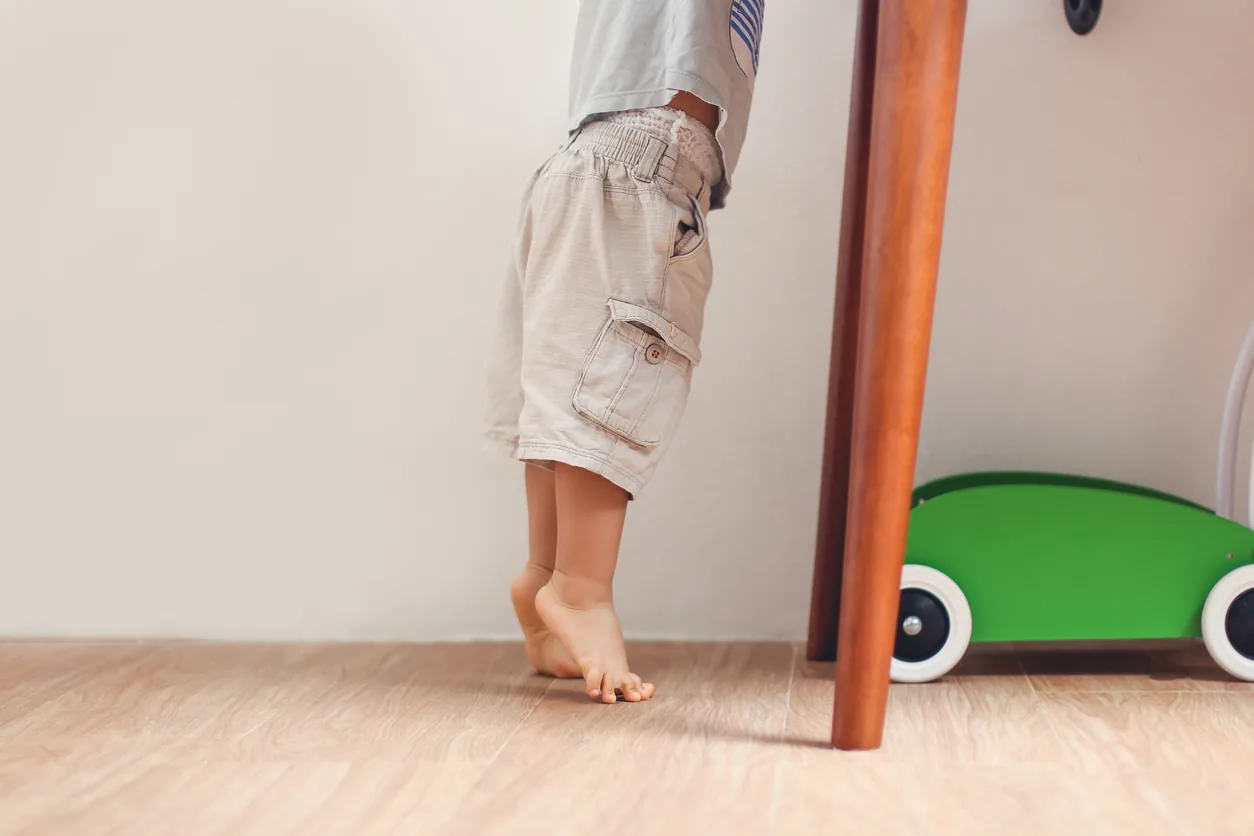
Persistent toe-walking is not typical and should be assessed. Flat feet in young children are normal - the arch develops over time - but if there's pain, tripping, or your child tires easily, book an assessment.
3. Shoes should protect, not correct
Children's feet grow fast, so check shoe fit regularly - every 1-3 months up to age three, then every few months after that. A good shoe fits the natural shape of the foot with a rounded toe box, about 10mm of growing room, a firm heel and a flexible sole. We cover fitting in detail in our guide to choosing the best shoes for your child.
4. Heel pain in active kids is common
Growing, sporty children between about 8 and 13 often develop heel pain - frequently a growth-plate irritation called Sever's disease. It responds very well to load management, footwear changes and supportive devices, and almost all kids return to full sport. Heel pain that limits activity or is constant should be checked.
Worried about your child's feet? We can help
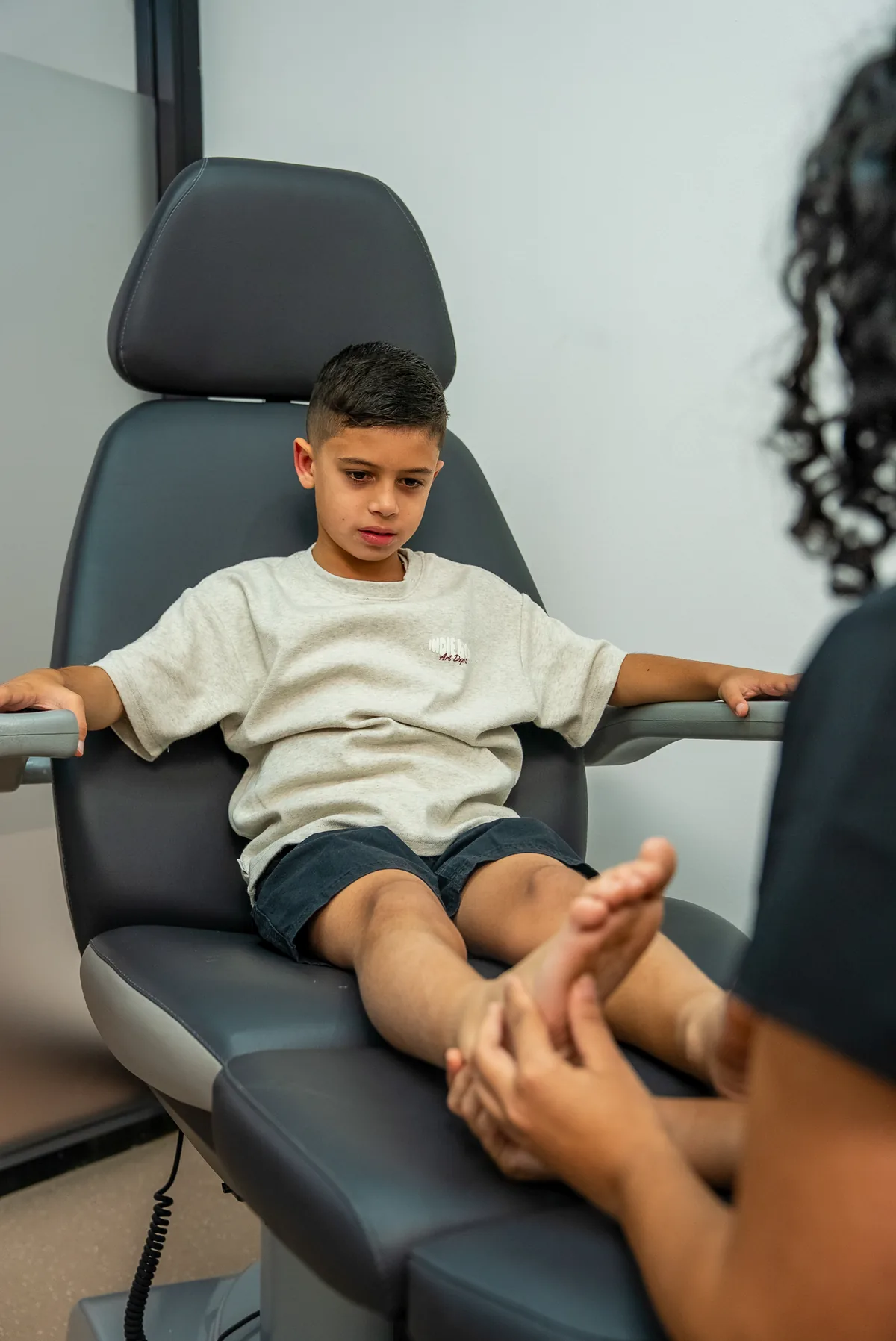
Our children's podiatry service gives you a clear, reassuring answer. Often we can tell you everything is developing normally; where it isn't, we tailor a simple management plan. We see families from Bexley, Rockdale, Hurstville and across the St George area - book online or call 1300 345 226.
Related on our site
Reviewed by Dr Vanessa Hadchiti, BAppSc (Podiatry), MIPH, MIDI. This article is general information, not a diagnosis - for advice about your own feet, book an assessment.
Frequently asked questions
At what age should my child's flat feet worry me?
Flat feet are normal in young children and the arch usually develops with time. Get them checked if your child has foot or leg pain, tires or trips more than peers, or the flatness is severe and rigid rather than flexible.
Is toe-walking normal?
Occasional toe-walking in toddlers can be normal, but persistent toe-walking beyond about age two should be assessed, as it can occasionally point to a tightness or developmental issue worth addressing early.
How often should I buy my child new shoes?
Check the fit every one to three months up to age three, every four months to age five, and every six months after that - children's feet grow in unpredictable spurts.